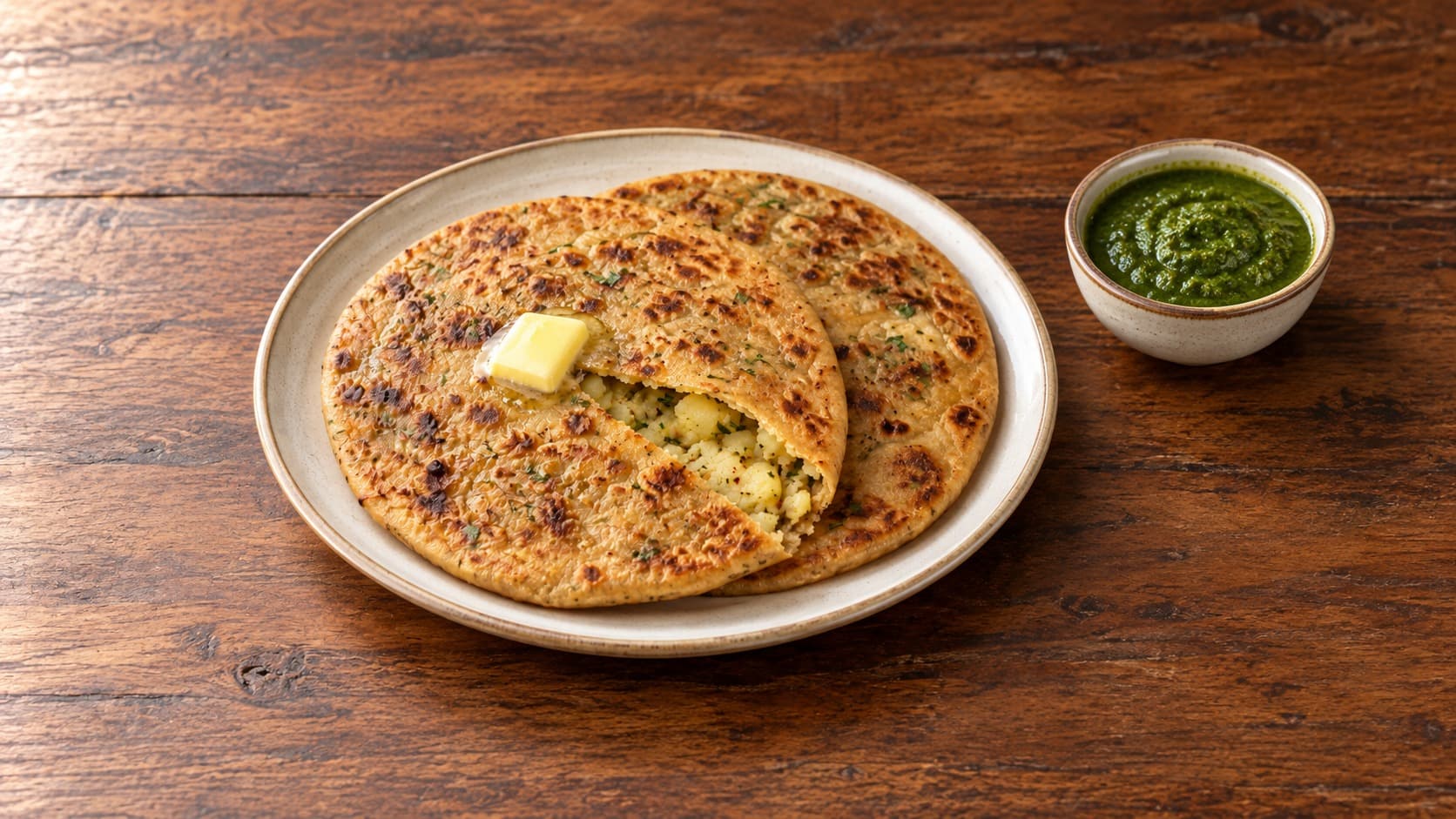
Aloo paratha is a comforting North Indian flatbread with a soft whole-wheat exterior wrapped around a savory, tangy potato filling fragrant with ginger, coriander, green chili, garam masala, and amchur. This version uses a well-rested pliable dough, thoroughly dried and lump-free potato filling, and medium-high griddle heat for evenly distributed stuffing, tender layers, lightly crisp edges, and characteristic golden-brown blistering.

Md Afroz Alam
0 followers
49
Cook Time
4
Servings
5
1 reviews
Medium
Difficulty
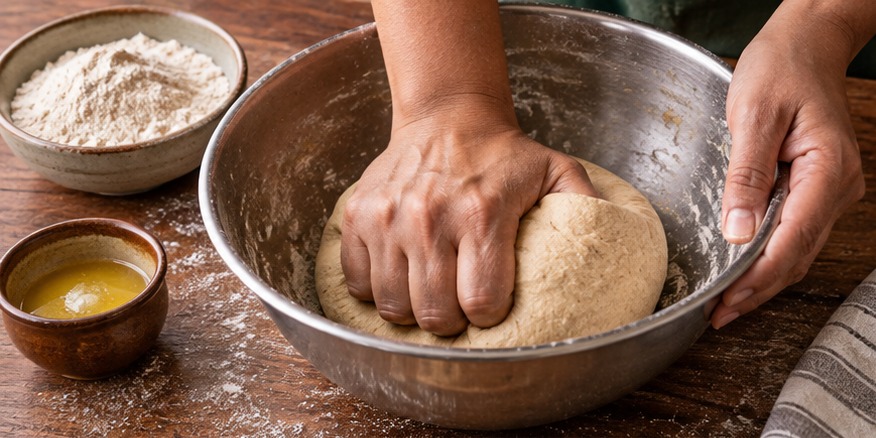
Combine the whole-wheat atta with 0.5 teaspoon of the salt in a large mixing bowl. Rub in 1 tablespoon of the ghee, then gradually add the 180 ml water while mixing by hand. Knead for 6–8 minutes until the dough is soft, smooth, pliable, and slightly tacky but not sticky; it should indent easily when pressed with a fingertip. Cover and rest at room temperature for 20 minutes.
A soft dough stretches around the filling more easily than a stiff dough and greatly reduces the chance of the parathas tearing while rolling.
Place the potatoes in a saucepan and cover with cool water by approximately 1 inch. Bring to a boil over high heat, then reduce to medium and cook at a steady simmer for 18–25 minutes, depending on potato size, until a thin knife enters the center easily but the potatoes are not splitting or waterlogged. Drain immediately, allow excess steam to escape for 5 minutes, then peel while warm. Mash or grate them until completely lump-free, then spread the potato loosely in a bowl for another 5 minutes so excess moisture can evaporate.
Avoid overcooking the potatoes. Wet, mushy potatoes make the filling sticky and are one of the main causes of torn or leaking aloo parathas.
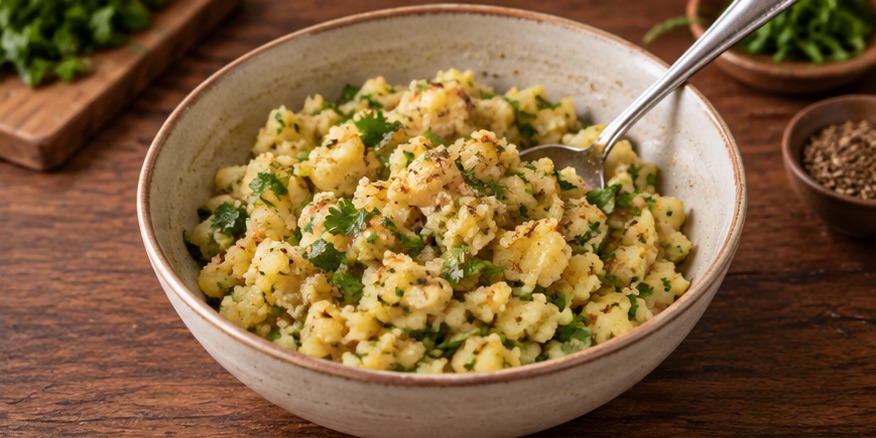
Finely chop the green chili and add it to the potatoes with the grated ginger, coriander leaves, remaining 1 teaspoon salt, ground coriander, amchur, garam masala, Kashmiri red chili powder, and ajwain. Mix gently with your fingertips or a fork until the seasonings are evenly distributed without turning the potato pasty. The filling should be dry, fluffy, savory, lightly hot, and noticeably tangy. Divide it into 8 equal portions.
Run your fingers through the finished filling and crush any remaining potato lumps; even small hard pieces can puncture the dough during rolling.
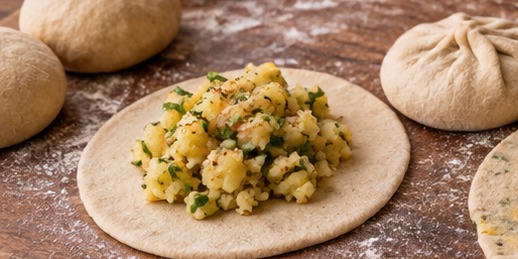
Knead the rested dough briefly and divide it into 8 equal balls, keeping them covered. Flatten one ball and roll it on a lightly floured surface into a circle approximately 4–5 inches in diameter, keeping the center slightly thicker than the outer edge. Place one portion of potato filling in the center. Bring the dough edges upward around the filling, pleat them together, and pinch firmly to create a complete seal. Press the sealed top gently downward and flatten the stuffed ball into a thick disc.
Use only a light dusting of flour. Excess dry flour prevents the dough from gripping the filling and can make the finished paratha dry.
Place the stuffed disc seam-side down and dust it lightly with atta. Roll gently from the center outward, rotating the paratha frequently rather than pressing repeatedly in one spot. Continue until it is approximately 7–8 inches across and about 0.125 inch thick, with the potato filling distributed almost to the edge. Repeat with the remaining portions, keeping rolled parathas separated and lightly dusted.
If resistance builds while rolling, stop pressing harder. Rotate the paratha and use shorter, gentler strokes so the filling spreads evenly without breaking through the dough.
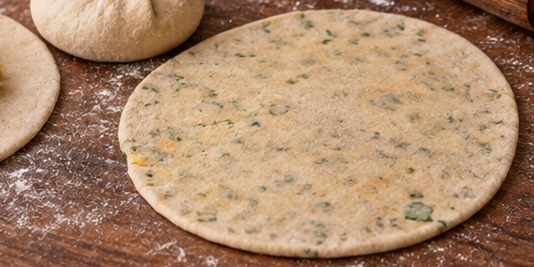
Heat a heavy tawa, cast-iron skillet, or flat griddle over medium-high heat until thoroughly hot, ideally around 400–425°F (205–220°C) if checked with an infrared thermometer. Brush excess flour from one paratha and place it on the dry surface. Cook for 45–60 seconds until small bubbles appear and the underside develops pale brown spots, then flip. Cook the second side for about 45 seconds, spread a small amount of the remaining ghee over the surface and around the edges, then flip again. Apply a little ghee to the second side and cook, flipping once or twice more, for 1–2 minutes until both sides show irregular golden-brown to deep-brown spots, the edges are cooked through, and parts of the paratha puff slightly. Repeat with the remaining parathas.
Do not cook over low heat; prolonged low-temperature cooking tends to dry and toughen the flatbread. Reduce the heat only if dark spots form before the dough has cooked through.
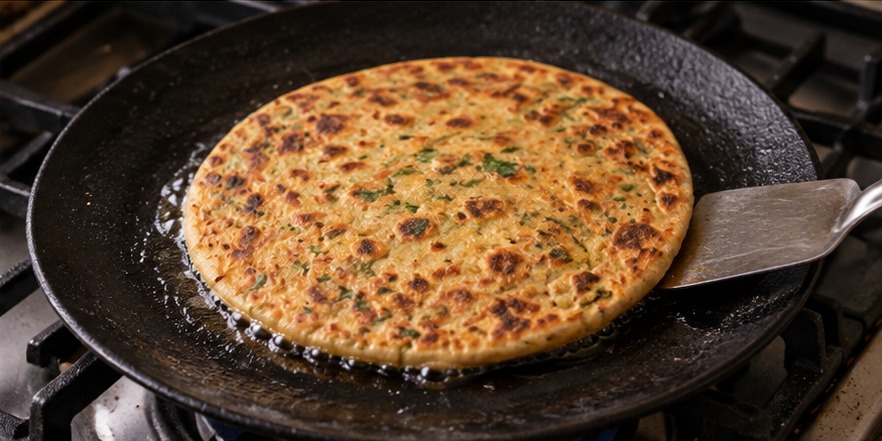
Transfer each cooked paratha to a covered plate or stack beneath a clean kitchen towel so it remains tender while the remaining parathas cook. Serve hot, allowing approximately 2 parathas per person. If desired, finish each serving with a small amount of the optional unsalted butter so it softens and begins to melt over the hot surface.
Aloo paratha is at its best immediately after cooking, when the outside still has delicate crisp patches while the bread and potato filling remain soft and hot.
Join the conversation
Log in to commentNo comments yet
Be the first to share your thoughts on this recipe!