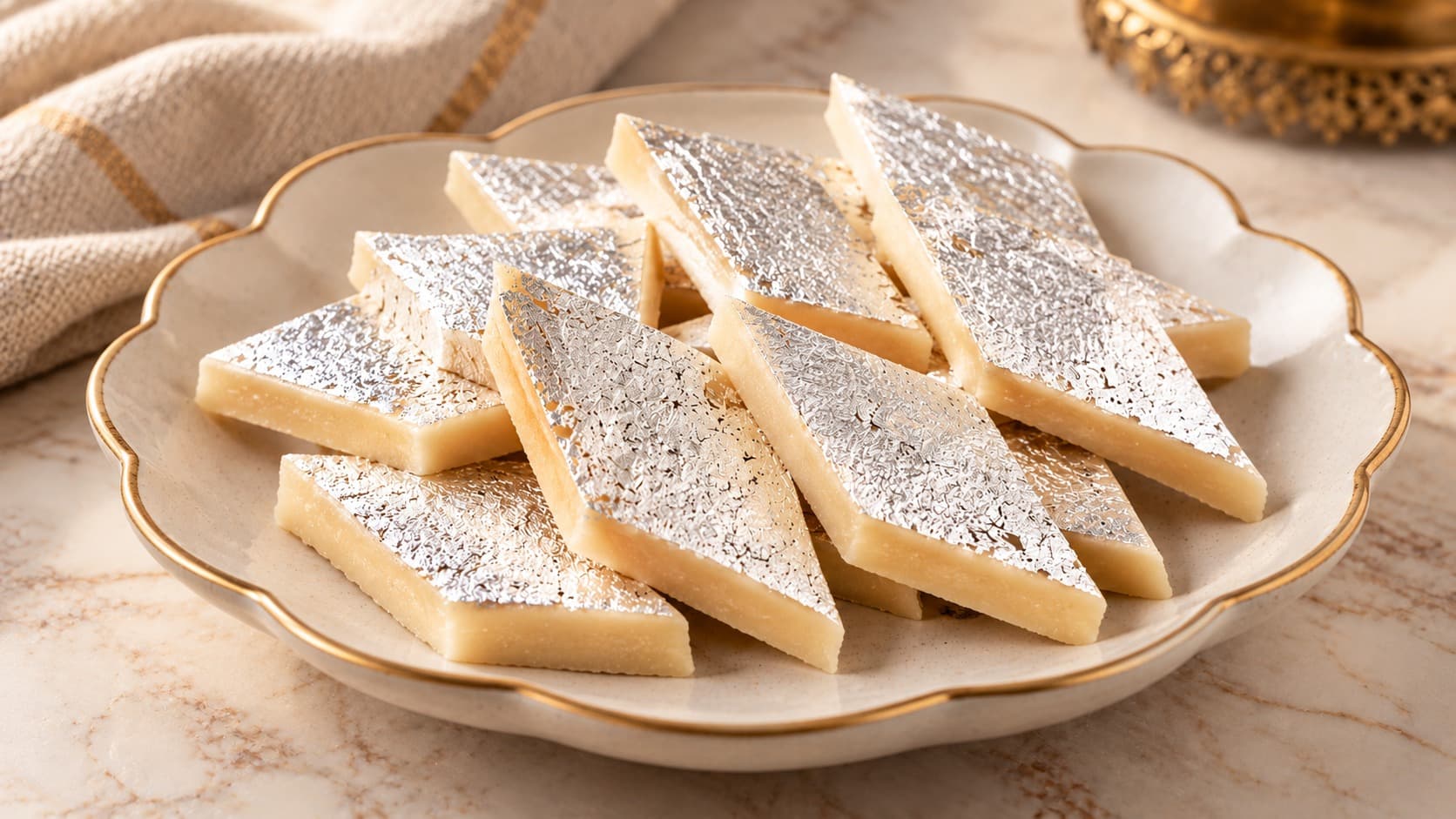
Kaju Katli, also known as Kaju Barfi, is a beloved Indian sweet made with finely ground cashews and sugar, celebrated for its delicate, melt-in-the-mouth texture and rich, naturally nutty flavor. These thin, elegant diamond-shaped pieces have a smooth, creamy ivory interior, gentle sweetness, and a subtle cardamom aroma when flavored. This homemade version uses a straightforward sugar-syrup technique and careful kneading to achieve beautifully soft, smooth, sweet-shop-style Kaju Katli, perfect for Diwali, celebrations, and gifting.

Md Afroz Alam
0 followers
12
Cook Time
20
Servings
0
0 reviews
Medium
Difficulty
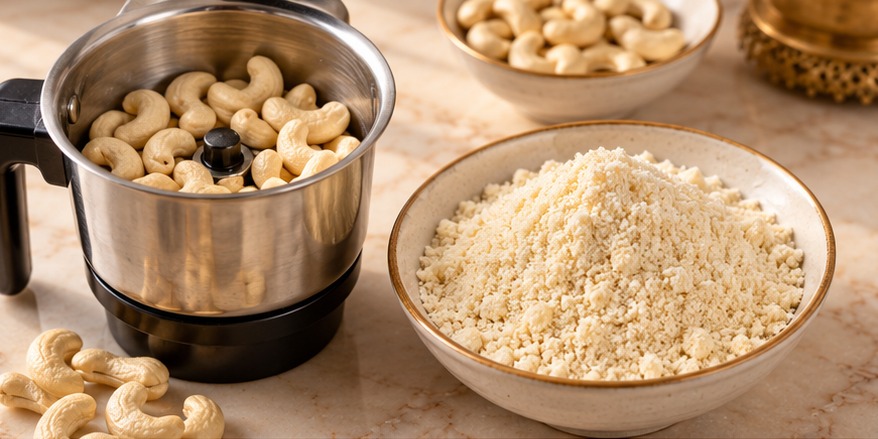
Place 200 grams of raw, unsalted, room-temperature cashews into a completely dry mixer-grinder, food processor, or high-powered blender. Work in small batches and pulse in short, 1–2-second bursts, pausing frequently, until the cashews become a fine, loose powder. Avoid continuous grinding because the cashews can release their natural oils and become a sticky paste. Pass the powder through a medium-fine sieve into a dry bowl. Briefly pulse any larger pieces remaining in the sieve and sift them again. The finished cashew powder should be uniformly fine, pale cream in color, and dry to the touch, without oily lumps. If using cardamom, mix it evenly into the prepared powder.
The fineness of the cashew powder is one of the most important factors in achieving silky Kaju Katli. Use completely dry cashews and equipment, and stop grinding before the natural oils begin to release. Refrigerated cashews should return to room temperature before grinding to avoid condensation.
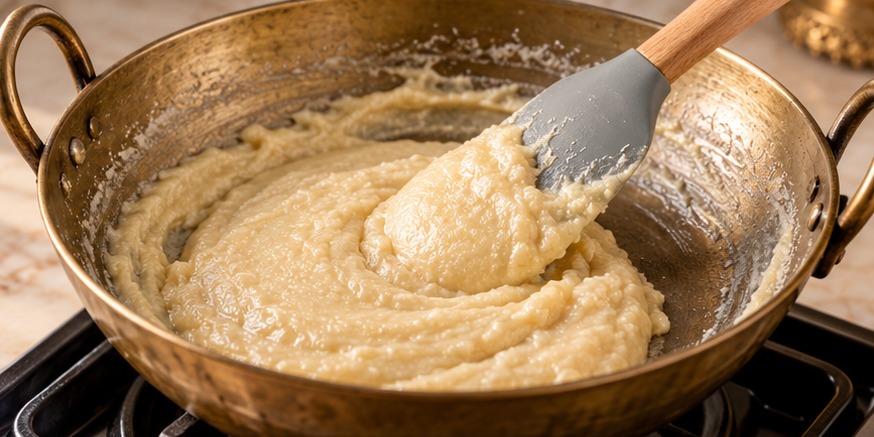
Place a heavy-bottomed, nonstick kadai or wide saucepan over medium-low heat. Add 130 grams of white granulated sugar and 60 ml of water. Stir gently until the sugar dissolves completely, approximately 2–3 minutes. Increase the heat slightly to medium and bring the clear syrup to a steady, bubbling boil for approximately 1–2 minutes. The syrup should appear slightly thickened, with small, consistent bubbles across the surface. For this simplified method, a precisely measured one-string consistency is not required. Once the sugar has dissolved completely and the syrup is bubbling steadily, immediately proceed to adding the cashew powder.
Avoid reducing the syrup excessively before adding the cashews. Overly concentrated syrup can cause the finished Kaju Katli to become hard, chewy, or grainy. White sugar helps preserve the traditional pale ivory color.
Reduce the burner to low heat. Add the sifted cashew powder to the bubbling sugar syrup in two additions, stirring continuously with a sturdy silicone spatula after each addition to prevent lumps. Continue cooking over low heat for approximately 5–7 minutes, stirring and scraping the bottom and sides of the pan constantly. Initially, the mixture will look soft, thick, and slightly sticky. As moisture evaporates, it will become denser, smoother, and increasingly cohesive. Continue until the mixture gathers into one soft mass and begins leaving the sides of the pan cleanly. The correct consistency resembles a soft, pliable dough rather than a liquid paste. To check, remove a tiny portion, let it cool briefly, and roll it between your fingers. It should form a smooth ball without sticking excessively. Remove the pan from the heat immediately when this stage is reached.
Do not wait for the mixture to become completely dry or firm inside the pan. It continues to stiffen as it cools. If the cooled test portion remains very sticky, cook for another 30–60 seconds over low heat and test again. Overcooking is the main cause of dry, cracked Kaju Katli.
Transfer the cooked cashew mixture immediately onto a clean sheet of parchment paper or a lightly ghee-greased work surface. Spread it slightly with a spatula and allow it to cool for approximately 2–3 minutes, until hot but comfortable enough to handle. If using ghee, spread a small portion across your palms or the parchment to prevent sticking. Gently fold and knead the warm cashew mixture for approximately 1–2 minutes until it develops a smooth, uniform, supple texture. Press the dough together, fold it over itself, and repeat with gentle pressure. The finished dough should be soft, cohesive, and pliable, with minimal visible graininess or cracks.
Kneading while the dough is still warm creates the characteristic smooth, melt-in-the-mouth texture. Do not over-knead, as excessive handling can release oil from the cashews. If the dough begins to crack, work it gently while it remains warm rather than allowing it to cool completely.
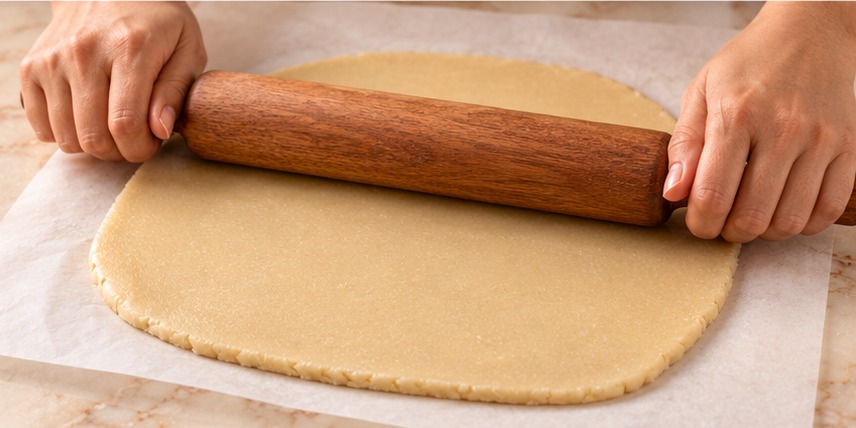
Place the warm cashew dough between two large sheets of parchment paper. Flatten it slightly with your palms, then use a rolling pin to roll it into an even sheet approximately 4–5 mm (0.16–0.2 inch) thick. Apply gentle, consistent pressure and roll from the center outward to maintain an even thickness. Lift and reposition the upper parchment if necessary to remove wrinkles and smooth the surface. Shape the dough into a roughly rectangular or square sheet to minimize trimming waste. The surface should appear smooth, pale ivory to light beige, and mostly matte, with a delicate natural cashew sheen.
Traditional Kaju Katli is relatively thin, unlike thicker varieties of barfi. Rolling between parchment sheets prevents sticking, improves surface smoothness, and produces more even pieces without requiring additional flour or sugar.
If using edible silver leaf, carefully peel away the top parchment while the rolled cashew sheet is still slightly warm. Using the backing paper supplied with the silver leaf, gently transfer the thin silver sheets onto the surface, covering the available area without excessive overlapping. Press very lightly through the backing paper so the silver adheres to the cashew fudge, then carefully lift the backing away. Avoid touching the delicate silver directly because it tears and sticks easily. The surface should have a thin, naturally irregular silver finish, while the pale cashew interior remains visible along the edges. Skip this stage if preparing plain Kaju Katli.
Use only certified food-grade, vegetarian-compatible edible silver leaf specifically manufactured for consumption. Decorative craft foil or imitation silver leaf must never be used on food.
Leave the rolled cashew sheet undisturbed on its parchment-lined surface at room temperature for approximately 20–30 minutes, until it has cooled and firmed sufficiently to hold its shape. The sheet should feel set on the surface but remain slightly tender when gently pressed. Avoid placing it in direct sunlight or near a hot stove. Once cooled, the mixture should have a delicate, dense, fudge-like consistency rather than a brittle or crunchy texture.
Allow the sweet to set naturally before cutting for clean edges. Avoid prolonged refrigeration before slicing, because a very cold sheet can become harder to cut cleanly.
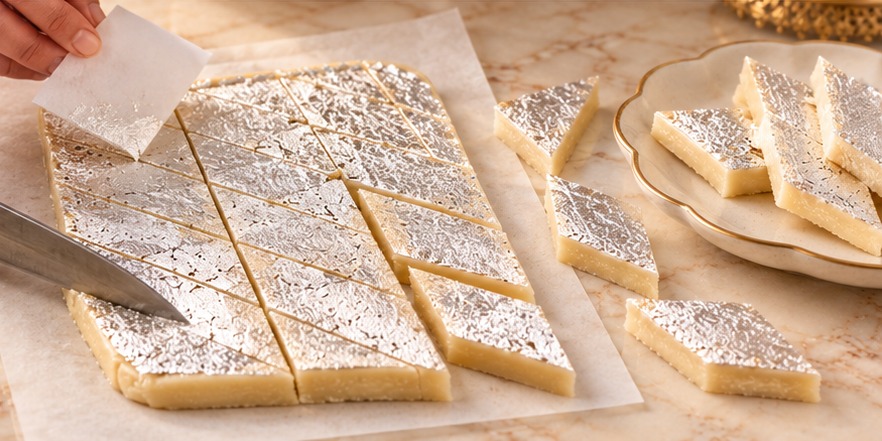
Transfer the set cashew sheet onto a clean cutting board while keeping the parchment underneath. Using a long, sharp knife, make evenly spaced parallel cuts approximately 3–3.5 cm (1.2–1.4 inches) apart. Rotate the cutting direction and make a second series of parallel diagonal cuts at approximately 45 degrees to create the traditional diamond-shaped pieces. Aim for approximately 20 small to medium pieces, depending on the final size of the rolled sheet. Trim any uneven outer edges and gently separate the diamonds using a thin spatula. Each piece should have clean, slightly softened edges, a smooth pale cashew interior, and a delicate silver-coated top if the optional leaf was applied.
Use one confident downward knife movement for each cut and wipe the blade when necessary. Avoid dragging the knife through the silver coating, which can cause the delicate leaf to wrinkle or tear.
Arrange the finished Kaju Katli diamonds on a clean ceramic serving plate or traditional mithai platter. Place them in a loose, slightly overlapping arrangement that shows their diamond geometry, smooth tops, and delicate thickness. Serve at room temperature for the best soft, creamy, melt-in-the-mouth texture. For storage, place the sweets in a clean, dry, airtight container, separating layers with parchment paper. Keep in a cool, dry environment and consume within approximately 5–7 days, or refrigerate for up to 2 weeks for longer storage. Bring refrigerated pieces to room temperature before serving for the best texture.
Kaju Katli is especially enjoyable with masala chai or after a festive Indian meal. Because this recipe contains no milk and very little added moisture, it stores better than many milk-based mithai, although freshness and hygienic handling still matter.
Join the conversation
Log in to commentNo comments yet
Be the first to share your thoughts on this recipe!