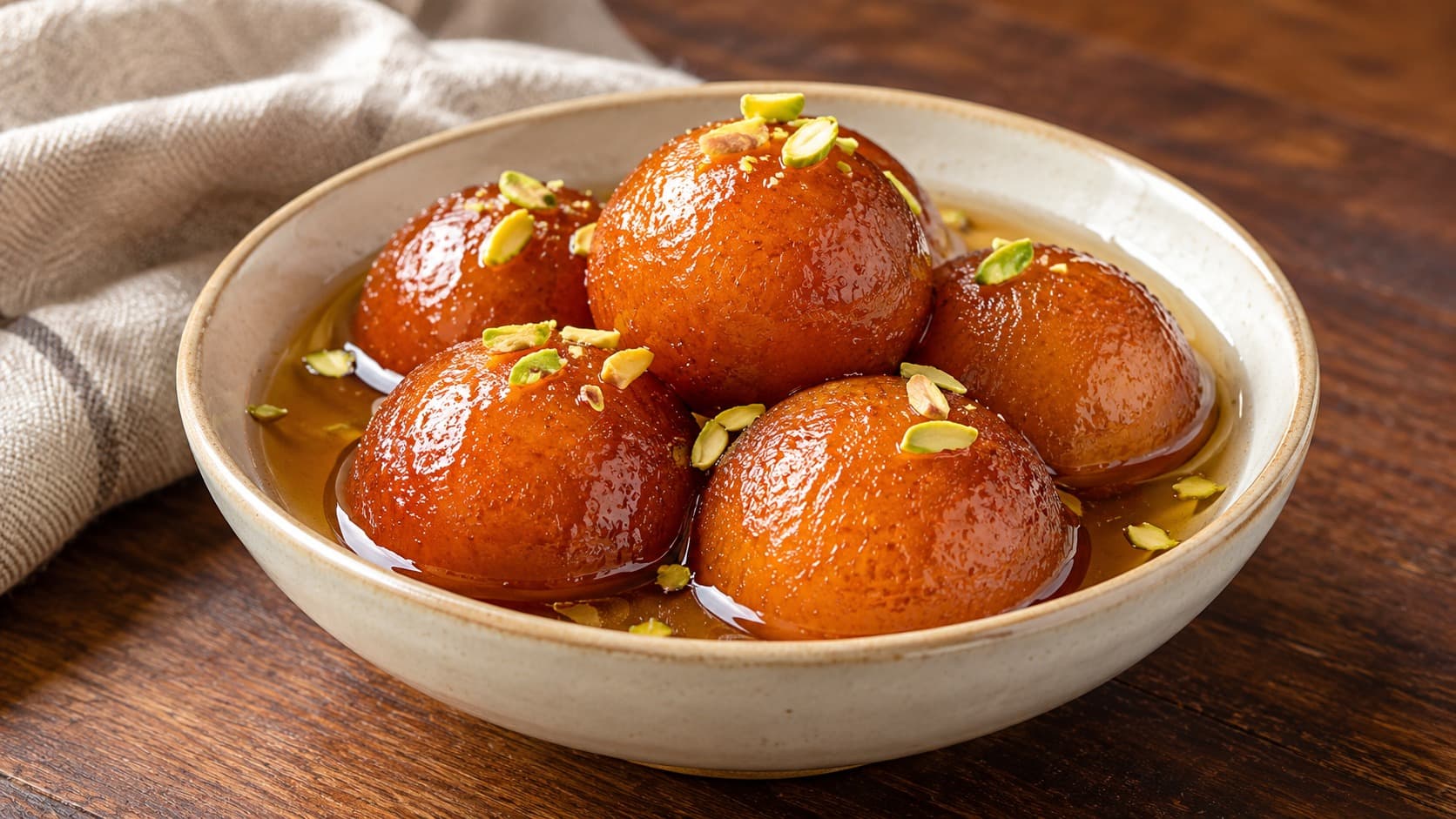
Classic Indian gulab jamun features beautifully golden-brown, melt-in-the-mouth milk-solid dumplings soaked in a fragrant rose and green cardamom sugar syrup. Made with traditional khoya (mawa), these delicate sweets develop a rich, creamy interior and a tender, syrup-soaked texture through gentle, slow frying. This carefully balanced recipe delivers authentic flavor, even browning, and wonderfully soft jamuns without excessive sweetness.

Md Afroz Alam
0 followers
45
Cook Time
9
Servings
0
0 reviews
Medium
Difficulty
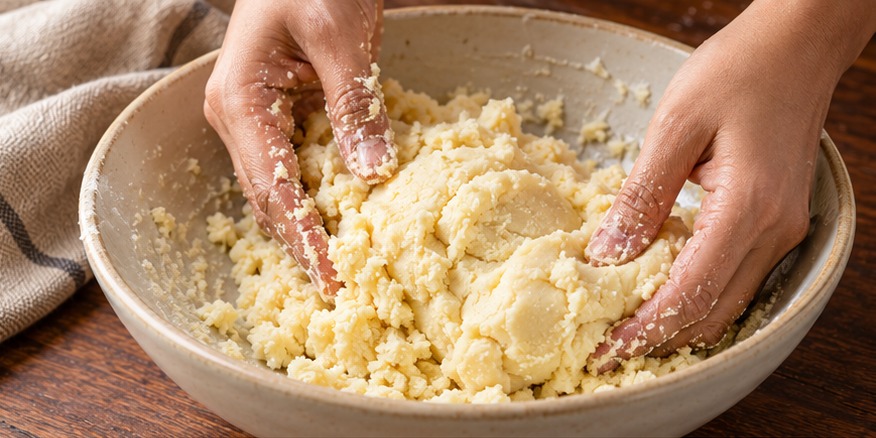
Place the finely grated, room-temperature khoya in a wide mixing bowl. Using your fingertips or the heel of your palm, gently mash it for 2–3 minutes until smooth and free of visible granules. Add the all-purpose flour, baking powder, and melted ghee. Mix gently until the ingredients are evenly distributed. Gradually incorporate the 15 ml of whole milk, adding a little at a time, until the mixture comes together into a soft, cohesive, slightly moist dough. Stop adding milk once the correct consistency is reached. Gently bring the dough together without vigorous kneading. Cover with a clean kitchen towel and rest for 15–20 minutes at room temperature.
The dough should feel soft and pliable but not wet or sticky. Excessive kneading develops gluten and can make the finished gulab jamun dense or chewy. Smooth, slightly moist khoya gives the best texture.
While the dough rests, combine the granulated sugar and 450 ml water in a wide, deep saucepan. Place over medium heat and stir gently until the sugar dissolves completely. Bring to a gentle boil, then reduce to medium-low heat and simmer for 5–7 minutes. Add the ground green cardamom and lemon juice. The finished syrup should be clear, lightly sticky, and fluid, without reaching one-thread consistency. Remove from the heat and stir in the rose water. Keep the syrup covered and warm at approximately 120–140°F (50–60°C) while preparing the jamuns.
Avoid making the syrup excessively thick. A light, flowing syrup penetrates the fried dumplings more effectively. Lemon juice helps reduce sugar crystallization, while adding rose water off the heat preserves its delicate floral aroma.
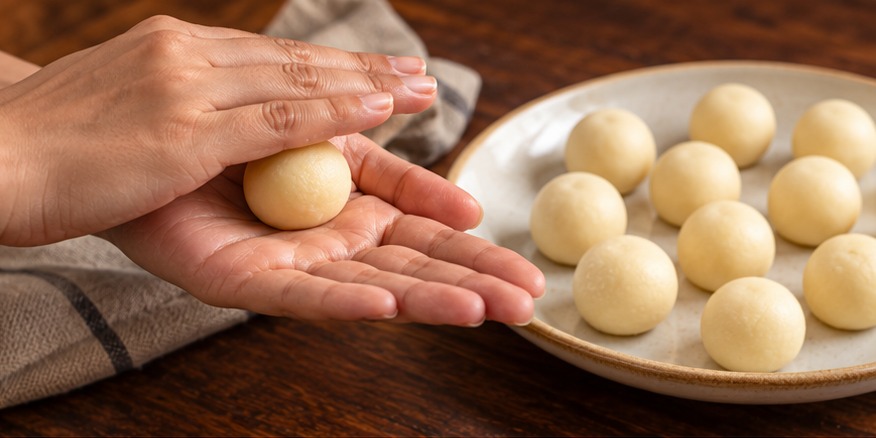
After the dough has rested, gently bring it together once more without prolonged kneading. Divide into 18 equal portions, approximately 14–15 grams each. Roll each portion between your palms using light, even pressure to form a smooth sphere approximately 2.5 cm (1 inch) in diameter. Ensure the surface has no visible cracks, seams, or dry patches. Place the shaped balls on a clean plate and cover loosely while heating the frying ghee.
Cracks can expand during frying and cause the jamuns to split. If the dough feels slightly dry, work it gently between your palms until smooth rather than applying heavy pressure. Uniform sizing ensures even cooking.
Pour the deep-frying ghee into a small, heavy-bottomed kadai or deep saucepan, ensuring there is sufficient depth for the dumplings to float freely. Heat over medium-low heat until the ghee reaches approximately 285–300°F (140–150°C). Use a kitchen thermometer for accuracy. Test with a tiny piece of dough: it should sink briefly before rising slowly with small, gentle bubbles. If the dough browns immediately or bubbles vigorously, reduce the heat and allow the ghee to cool slightly.
Temperature control is the most important frying technique. Excessively hot ghee browns the exterior before the interior cooks, producing hard or doughy centers. Gentle heat allows the milk solids to cook evenly.
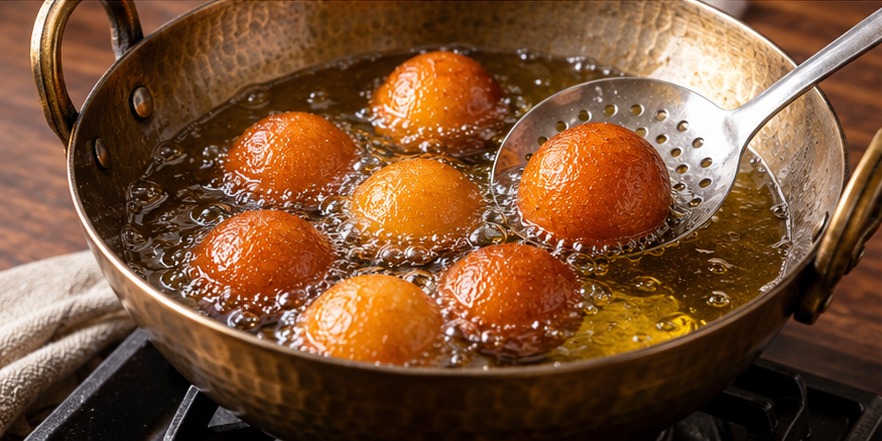
Carefully lower 5–6 prepared dough balls into the warm ghee, leaving space for expansion. Maintain low to medium-low heat and keep the frying temperature near 285–300°F (140–150°C). During the first minute, allow the balls to rise naturally without forceful stirring. Once they float, gently rotate them with a slotted spoon so every surface browns evenly. Fry for approximately 8–12 minutes per batch, adjusting the heat as necessary, until the jamuns are uniformly deep golden brown to reddish amber. They should appear evenly colored, slightly expanded, and gently firm on the outside. Remove with a slotted spoon and drain for 1–2 minutes. Repeat with the remaining dough balls.
Do not overcrowd the pan or rush the browning process. The final color should develop gradually through the cooking of the milk solids. If a test jamun has a raw or gummy center when cut open, reduce the temperature and fry subsequent batches more slowly.
Check that the prepared sugar syrup remains warm at approximately 120–140°F (50–60°C), but is not boiling. Transfer the freshly fried and briefly drained jamuns into the syrup, ensuring they have enough room to expand. Gently submerge or rotate any exposed pieces so they absorb the syrup evenly. Cover the pan and allow the jamuns to soak for at least 2 hours, preferably 3 hours, without vigorous stirring. During soaking, the dumplings should become noticeably plumper, tender, and uniformly moist as syrup penetrates their centers.
Never add the fried jamuns to rapidly boiling syrup, which can damage their delicate structure. Avoid excessively thick or cold syrup. The soaking period is essential for achieving the signature juicy, melt-in-the-mouth interior.
When ready to serve, gently warm the soaked gulab jamun with their syrup over very low heat for 2–3 minutes, keeping the liquid below a simmer. Arrange two jamuns per serving in a small dessert bowl and spoon a little fragrant syrup around and over them. If desired, finish with a light sprinkling of finely chopped unsalted pistachios. Serve warm for the softest texture and fullest cardamom-rose aroma. The jamuns should yield easily to a spoon and remain moist throughout.
Gulab jamun can be made one day ahead and refrigerated in its syrup in a covered container. For best flavor and texture, gently reheat before serving. Refrigerate leftovers promptly and use within 3–4 days.
Join the conversation
Log in to commentNo comments yet
Be the first to share your thoughts on this recipe!